Landscaping Choices That Can Affect ATU and Drain Field Health
Landscaping can improve the look of a property, but it can also affect how a septic system performs over time. For homeowners with aerobic treatment units (ATUs), outdoor changes such as planting, grading, drainage adjustments, and hardscaping can impact both the treatment system and the drain field. Some choices support healthy operation, while others may place unnecessary stress on the system if not planned carefully.
Because many septic components are underground, it is easy to overlook how landscaping decisions connect to system performance. Alternative Septic Management works with homeowners across Georgia to evaluate how outdoor property conditions and landscaping changes may affect ATU operation and long-term drain field health. Understanding these connections helps homeowners make informed choices before beginning new outdoor projects.
Paying Attention to Landscaping Around Septic Systems
A septic system depends on more than what happens inside the tank. The surrounding property also plays an important role. Soil conditions, surface drainage, vegetation, and access to system components can all influence how well an ATU performs.
The drain field, in particular, relies on stable soil conditions to absorb treated wastewater. If the soil becomes overly compacted, saturated, or disrupted, wastewater may not disperse as efficiently as intended. Landscaping choices that change how water moves across the yard or how roots grow underground can gradually affect this process.
Even projects designed to improve curb appeal can create unintended issues if septic components are not considered first. That is why landscaping and system health are often more closely connected than you may realize.
How Soil and Water Movement Influence System Performance
ATUs treat wastewater inside the tank using oxygen and beneficial bacteria. After treatment, the water moves to the drain field, where the surrounding soil helps complete the final stage of dispersal and filtration. For that process to work properly, soil needs to remain open enough to absorb water at a steady rate.
Landscaping can influence this balance in several ways. Changes in grading may redirect water toward the drain field. New retaining walls or borders may affect runoff patterns. Frequent traffic over the area can compact soil and reduce its ability to absorb moisture.
Water movement across the property is especially important during rainy periods. If runoff consistently flows toward septic areas, the soil may remain wetter for longer periods. This can reduce drain field recovery time and place added stress on the overall system.
Planting Decisions and Root Growth Near Septic Components
Plants are a natural part of landscaping, but their root systems should be considered when working near septic areas. What is planted and where it is planted can influence underground components over time.
Root Growth Near Tanks, Lines, and Drain Fields
Roots naturally seek moisture and nutrients. Because septic components carry water underground, nearby roots may gradually grow toward tanks, pipes, or drain field lines. Over time, this can create pressure around components or interfere with normal flow if roots reach vulnerable areas.
This issue usually develops gradually rather than happening all at once. A tree or shrub planted years earlier may not create concerns immediately, but as roots expand, the likelihood of interaction with the system can increase.
Choosing Lower-Impact Plants for Septic Areas
Many homeowners prefer to keep septic areas visually appealing while avoiding unnecessary risk. Grass cover and shallow-rooted plants are often less disruptive choices than large shrubs or aggressive trees. Careful placement of landscaping features can also help keep system components accessible while maintaining the yard’s appearance.
Before planting near septic areas, it is helpful to understand where system components are located so roots have room to grow away from critical infrastructure.
Grading, Drainage, and Excess Moisture Around the System
Drainage is one of the most important landscaping considerations for ATUs and drain fields. The goal is typically to encourage water to move away from septic areas rather than collect above them.
How Poor Drainage Can Affect Drain Field Absorption
When surface water repeatedly pools over the drain field, soil can remain saturated longer than normal. Wet soil absorbs treated wastewater more slowly, which can reduce the system’s ability to recover between cycles.
This does not always cause immediate problems, but repeated oversaturation can make the system more sensitive to heavy household water use or extended rainy weather. Over time, poor drainage patterns may contribute to uneven performance.
Gutters, Downspouts, and Surface Runoff
Roof drainage is another common source of excess water. Downspouts that discharge near septic areas can add significant moisture to the surrounding soil, especially during storms. In some yards, runoff from driveways or sloped areas may also move toward the drain field.
Simple awareness of where water travels during rainfall can be helpful. If water consistently collects near septic components, landscaping adjustments may be worth considering.
Heavy Features, Soil Compaction, and Access Concerns
Some landscaping features affect septic systems because of their weight or the traffic they attract. Vehicles, lawn equipment, and repeated foot traffic can compact the soil over time, especially when the ground is already wet.
Compacted soil has less open space, which can reduce water absorption and limit airflow below the surface. This can affect drain field performance and slow natural drying after rain.
Permanent features such as sheds, patios, retaining walls, or decorative structures may also create concerns if placed above or near septic components. These additions can make future access more difficult and may alter drainage or soil conditions around the system.
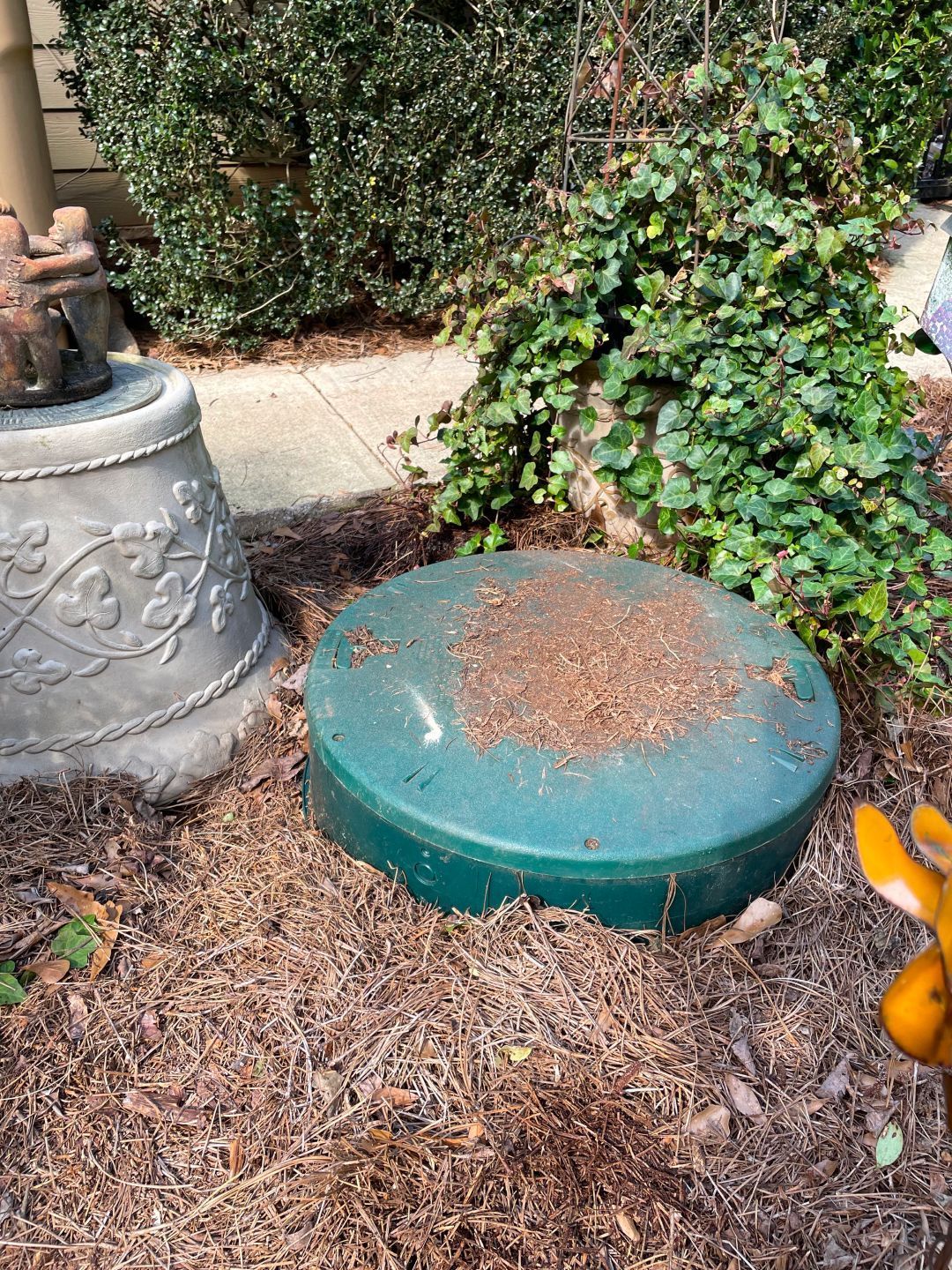
Planning around access is especially important. Septic lids, risers, and service areas should remain reasonably accessible for inspections and maintenance.
Signs Landscaping May Be Affecting System Health
Landscaping-related issues are often subtle at first. Homeowners may notice changes gradually rather than seeing one obvious problem.
Common signs can include soft or wet ground that lingers after rain, water pooling near the drain field, or unusual grass growth in one section of the yard. Inside the home, slower drainage may occasionally reflect changing conditions outside, particularly if the timing follows recent landscaping work or heavy rainfall.
These signs do not automatically indicate a serious issue, but they can suggest that yard conditions are affecting the system's performance and are worth looking into.
Planning Outdoor Projects With Your ATU in Mind
Before starting a landscaping project, it is helpful to know where tanks, lines, and drain field areas are located. This allows homeowners to plan planting beds, drainage changes, fences, or hardscaping without interfering with important system components.
Considering how water will move after the project is equally valuable. A new border, wall, or grading change may improve one part of the yard while unintentionally sending runoff toward the septic system.
A little planning early in the process can help protect both the investment in the landscape and the long-term health of the ATU.
Working With Alternative Septic Management Before Landscaping Changes
Landscaping and septic performance are closely connected, even when those connections are not immediately visible. Understanding how soil, water movement, plant growth, and outdoor structures affect the system helps homeowners make more thoughtful decisions about their property.
Alternative Septic Management works with homeowners across Georgia to help evaluate how landscaping and drainage choices may affect ATUs and drain fields before problems develop. If you are planning outdoor improvements or have noticed changes around your septic area, a professional evaluation can provide useful insight.
Call or text 404-788-3474 or visit the website to learn more about ATU inspections, drain field care, and protecting system performance before future landscaping projects begin.